


How to Recover from Shoulder Surgery
Chapter 1: A Tale of Two Shoulders
Let me tell you the story of two patients with the same surgery on the same day who ultimately had very different recovery paths.
It was 1997. The young orthopedic surgeons in the medical center where my clinic was located were well-trained and using the latest techniques in shoulder surgery. On a Wednesday in mid-July two men presented for their first rehabilitation session 5 days after rotator cuff shoulder surgery—let’s call them Bill and Jim.
Jim was 39 years old, fairly fit, but irritated that this process was taking him away from his work. He had had a moderate size rotator cuff tear repaired. Bill was 82 years old, fit and keen to get on with his rehabilitation. He also had a moderately sized rotator cuff tear repaired by the same surgeon with the same technique on the same day. At this point most clinicians would expect that Jim, being 40 years younger, would make a faster recovery than Bill. This was not to be the case.
Jim had done no preparation for his surgery. He was unaware of the details of his shoulder surgery and had read none of the printed materials supplied by the surgeon. He had not taken the surgeon’s advice to see me for an exercise program prior to the surgery. Since the operation he was struggling at home with simple daily activities such as washing and dressing.
Bill, on the other hand, was well prepared for the surgery. He had in fact been to see me three weeks earlier and started a simple exercise program. He had read everything he could lay his hands on, so knew the post-operative process and how to manage at home, despite living alone.
From this point on, the differences between Jim and Bill increased further. Jim often missed review sessions with me, and at these sessions admitted to going at times several days without doing his simple home exercise program. His unspoken attitude was that if the surgeon had done an expert job, he shouldn’t need to do any more. In contrast, Bill kept appointments, did a few minutes of exercise every day as instructed, but was careful not to over-stress the shoulder, and so protecting the repairing rotator cuff from injury.
And so how did Jim and Bill progress in their recovery? It would be great if I could report that with an excellent orthopedic surgeon and the latest modern surgical techniques that they both had the same progress! Obviously, this wasn’t the case, otherwise I wouldn’t be telling the story, I wouldn’t need to write this book, and you wouldn’t need to read it.
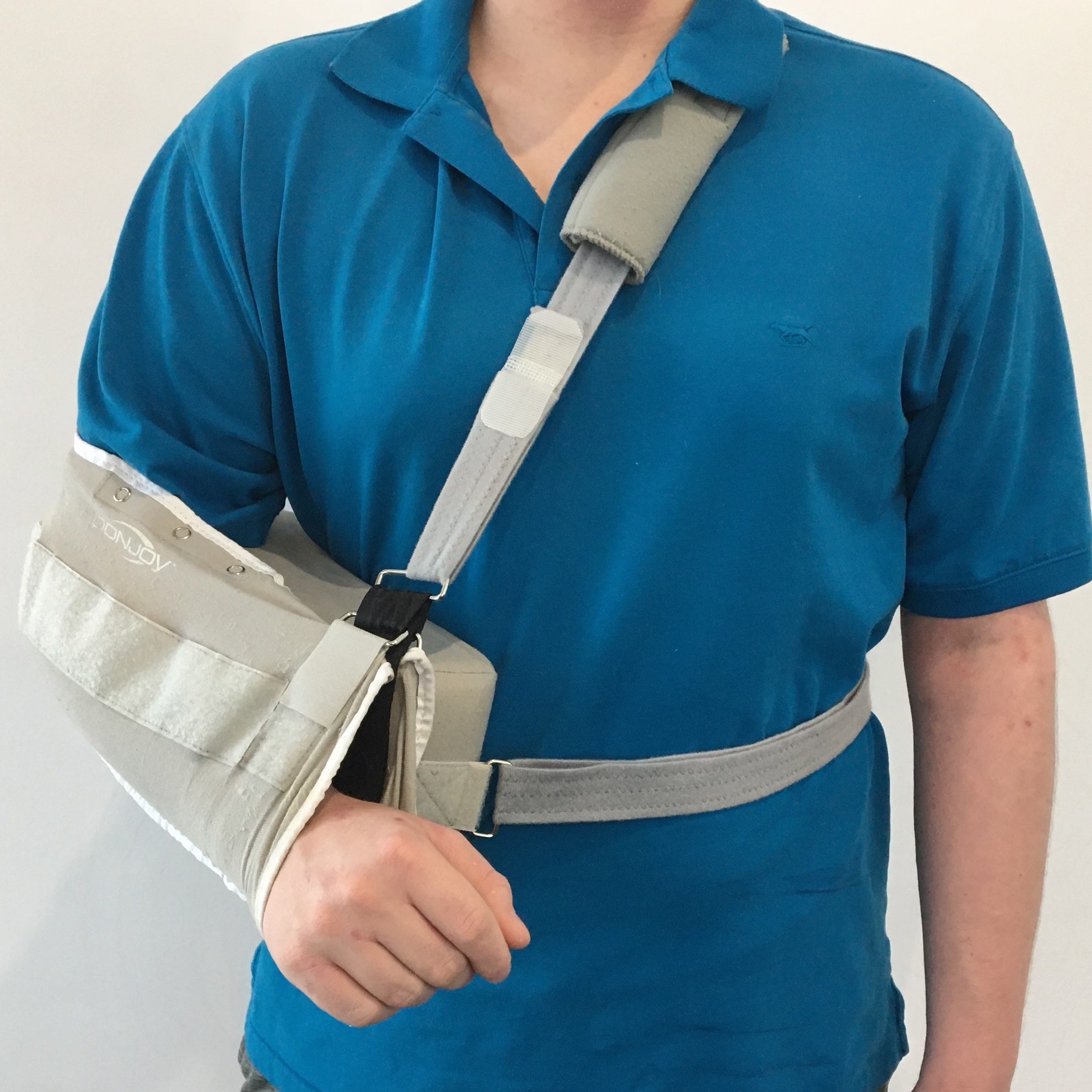
Bill’s progress was better than average—his pain settled quickly in the postoperative period. By the time the surgeon allowed him to stop using the sling 5 weeks after surgery, his range of shoulder movement was improving rapidly. Importantly, he had coped well at home with his arm in a sling for 5 weeks. At 3 months he had almost full range of movement; by 6 months he was doing a “return to golf” rehabilitation exercise program.
Jim however was struggling. He refused to take the pain and anti-inflammatory medication that had been prescribed by his orthopedic surgeon, and so his pain levels were much higher than Bill’s. As he was only occasionally doing his home exercise program, and was experiencing significant pain, his shoulder was getting very stiff. He was taking advice from acquaintances rather than his health professionals, and so was attempting to overcome the stiffness by doing his exercises more aggressively but infrequently.
At five weeks when he was advised to stop wearing his sling, he experienced a spike in his pain level. At this point he had very poor active range of motion with marked pain at the limit of movement.
By six months after surgery Jim was still experiencing quite a lot of discomfort over the shoulder and could not sleep on that side. His active range of movement was still restricted in every direction.
At 12 months post-operatively he still had not reached the level of recovery that Bill had at six months.
Why I Was Driven To Write This Book
Cases like Bill and Jim, and countless others in the 20 years since then, have made me realize that it is the patient who controls their recovery, not me as their physical therapist.
Several years ago, as a guest of that same orthopedic surgeon who operated on Bill and Jim, I attended a conference for orthopedic surgeons who specialize in the shoulder. On the last day of the conference, at a panel discussion in front of the 450 delegates, a professor of orthopedic surgery from the UK said:
“Your orthopedic surgery of the shoulder is only as good as the post-operative physiotherapy program.”
I would take that one step further and say:
“The post-operative recovery from orthopedic surgery of the shoulder is only as good as the patient makes it.”
When I can help patients make the right decisions about their shoulder rehabilitation and provide them with the knowledge and tools to have a speedy and effective recovery, then I am a happy Physiotherapist!
As I have publicly stated on LinkedIn:
“My purpose is to make a significant positive impact on the physical health of the clients who attend my physiotherapy clinic or consult with me online.”
This book allows me to do this on a grander scale, reaching far more people than I could in several lifetimes individually. I won’t now be so frustrated by those who refuse to be helped. And so, I set out to make a positive and meaningful difference with my words. And this book helps me reach more people and achieve that mission.
To take control of your recovery from shoulder surgery, you need to understand the basics of your surgery rehabilitation, and the process of healing. This will help you lose your anxiety and focus your attention and energies on getting well fast and efficiently. Recovery from shoulder surgery is a process, and it takes time. This timeline can be accelerated by avoiding complications, appreciating your physical limitations through each phase of the recovery process, and following the right steps in the process to promote faster healing.
Why You Should Read This Book
So, who could benefit from reading this book?
This book will help if you or a loved one:
◆ Have been referred to an orthopedic surgeon with a view to surgery for a shoulder problem.
◆ Have already seen an orthopedic surgeon and are considering shoulder surgery based on the surgeon’s advice.
◆ Have booked in for shoulder surgery.
◆ Have recently had shoulder surgery.
Once you understand the basics of the preparation for surgery, the surgery itself, and the rehabilitation program, there is much less fear and anxiety about the whole process. The predictability of the process becomes reassuring, allowing you to focus your entire attention and energy on rehabilitating your shoulder back to full pain-free function.
The knowledge and tools in this book help you make a speedy recovery, with less anxiety and pain, and ultimately a better return to full function of your shoulder.